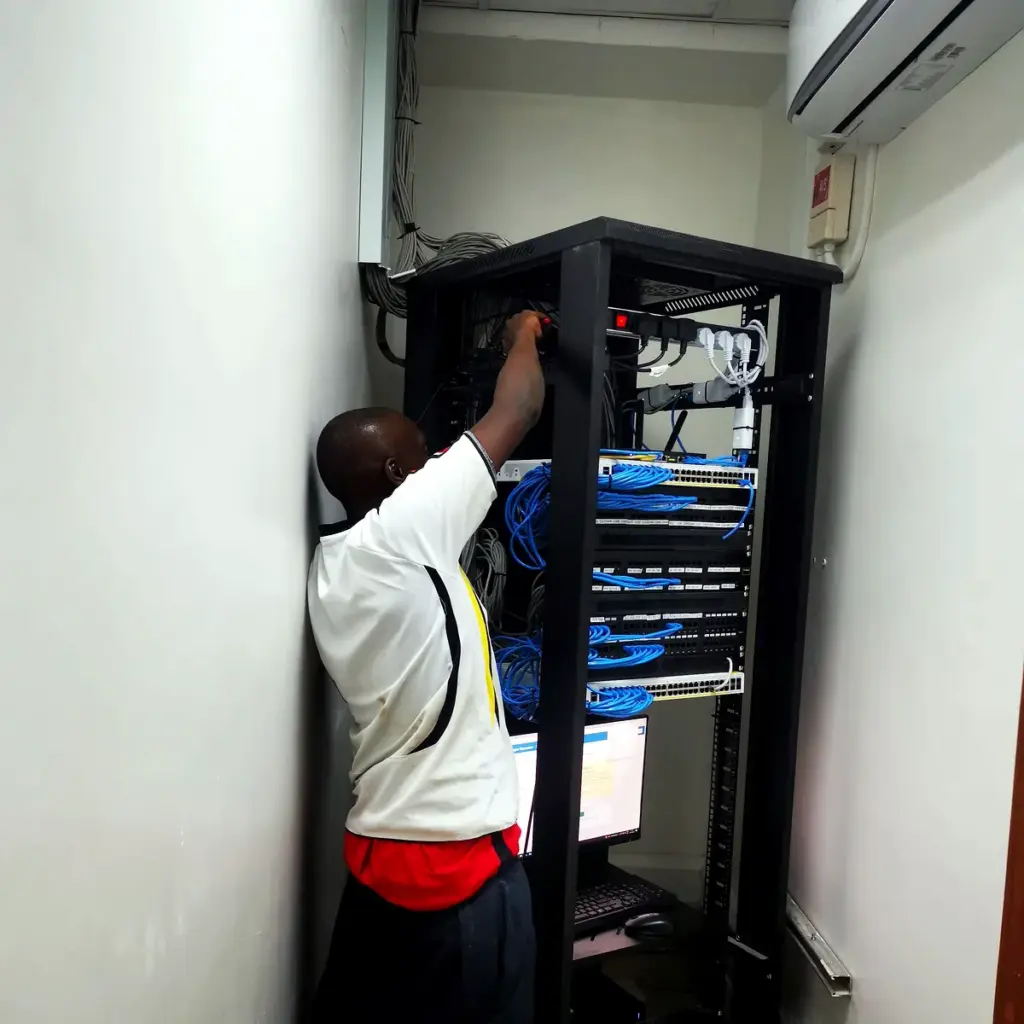
Many growing companies reach the same point: computers, email, printers and Wi-Fi all matter now, but nobody is employed to look after them. The work falls on whoever is most comfortable with computers, and it is rarely in their job description. Sooner or later you have to decide how IT will be looked after properly.
When an in-house person makes sense
If your team is large, your systems are complex, or IT problems need someone on site every day, a full-time hire can be right. An in-house person knows your people, your habits and your history, and can respond in minutes.
The catch is that one person cannot be an expert in everything, cannot be everywhere at once, and cannot be sick or on leave without leaving a gap. You also carry the full cost of salary, tools and training, whether the month is busy or quiet.
When a partner makes more sense
If you have no IT person, a managed IT partner gives you a whole department for a fixed monthly cost: a helpdesk, someone to look after devices and the network, and a plan for backups and security. You get a team with different skills, not one pair of hands.
If you already have one IT person, a partner adds cover for leave and busy weeks, plus specialist skills such as network design or security that one person cannot be expected to hold.
A hybrid that works well
Many companies land on a mix. The in-house person handles daily questions and knows the office. The partner handles monitoring, security, backups, projects and anything that needs a second opinion. Responsibilities are written down so nothing falls between the two.
A simple test
Ask what happens if your IT person, or the colleague who looks after IT, is away for two weeks. If the honest answer is that things would break, you need a partner.
What to ask a partner before signing
What exactly is covered, and what costs extra? How quickly will you respond, and how do I reach you? Who owns the passwords and the documentation? What happens if we end the agreement? A good partner answers these plainly and puts them in writing.
We work both ways: as your outsourced IT department, or as extra support for the person you already have.